
On GAMEPLAY Part 2 | From Perception to Action: Cue-Trigger Process, Marking, and Attunement in Play
How Actions, Signals, and Feedback Bring Play to Life, Idealize Skills and Sustain Connection
The Trigger Process
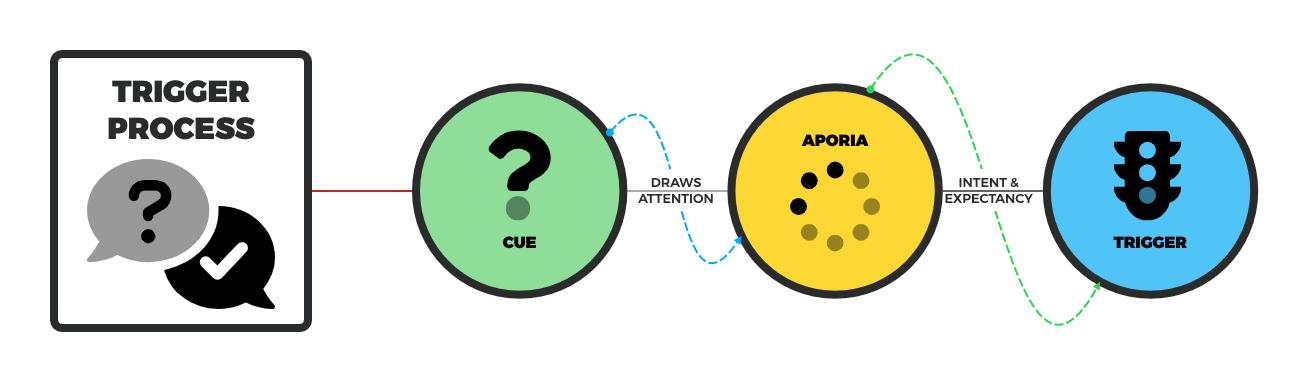
PLAY+ features a 2 part trigger process; a dipolar process. The cue is standard: usually a verbal cue or signal and the Trigger is the physical or conditioned signal for the skill. This is all standard if you use verbal-physical and classical-then-operant rulesets. It’s just not apparent until the higher levels of performance where it becomes proofing cues.
A cue discloses the action being done, the trigger affords direct coupling of action with the handler– in this environment. This clean start and clear criteria is essentially stimulus control over coupling with any and all affordances of action, even you.
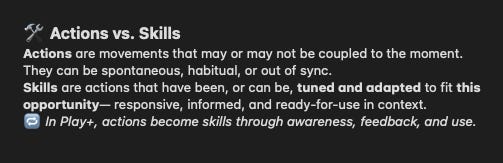
The Trigger process is how skill is deployed; actions are shaped and adapted to couple on the fly. The dipolar trigger process affords prospective control and the fine tuning of coupling precision between dog and handler.
The Cue is an Opportunity, the pause builds Expectancy, the Trigger affords Achievement. If we get through the trigger process - Cue-Aporia-Trigger - then we’ll get achievement on that rep; even the first rep, like in the video above.
Eppie and I had never done this vault before. He never saw that throw before in his life. We don’t vault from that position. What we have done before and what he does totally have is a super clear Trigger Process. He knows that the presentation of the vaulting obstacle is the Trigger. So do I. This is a relatively easy success even though the vault is fairly challenging.
The Cue affords awareness, Aporia shapes Attention and creates a Shared Aim, and the Trigger releases to satisfaction of action. That’s Boom-Pow– with a plan.
🎯 Byproducts of the Trigger Process (Play+)
The Wait (as a Skill)
The pause between cue and trigger isn’t dead time—it’s trained awareness.
The dog learns to hold readiness without acting, developing impulse control, timing, and emotional regulation. Wait becomes a reusable, transferable skill.Clear Initiative Transfer
The trigger marks a handoff—handler to dog. The cue is promise of action– dog to handler. This creates rhythm and reinforces cooperative leadership flow.Revealed Coupling Points
The aporia (pause) & Enriched Marking make visible where and when the dog couples. These moments can and should be marked, to be refined, celebrated, and remembered.Tuned Awareness
The pause heightens mutual awareness—both players are watching, feeling, and adjusting in real time.Embodied Anticipation
Expectancy is practiced. The dog learns to prepare without launching—holding emotional and physical readiness as a flexible edge.Adaptive Precision
Since action is not reflexive, it can be shaped to the situation. The delay allows for real-time reading and adjustment.Flow Rhythm
Cue → Pause → Trigger creates a beat. This rhythmic structure helps sustain attunement and immersion in play.Training Transparency
It shows the dog how play works. The structure becomes teachable, markable, and transferable across skills and games.Diagnostic Feedback
When flow breaks, the structure reveals where—cue clarity, timing of aporia, or trigger quality. This improves coaching and handler clarity.
Next Now Cycle Orienting & Attuning the Rhythm of Opportunity
The top of the Next Now cycle ought to look familiar. Now is what we just laid out; it’s where we do the thing we came out here to do. It’s where we have a clear goal and a good deal of control over the proposition.
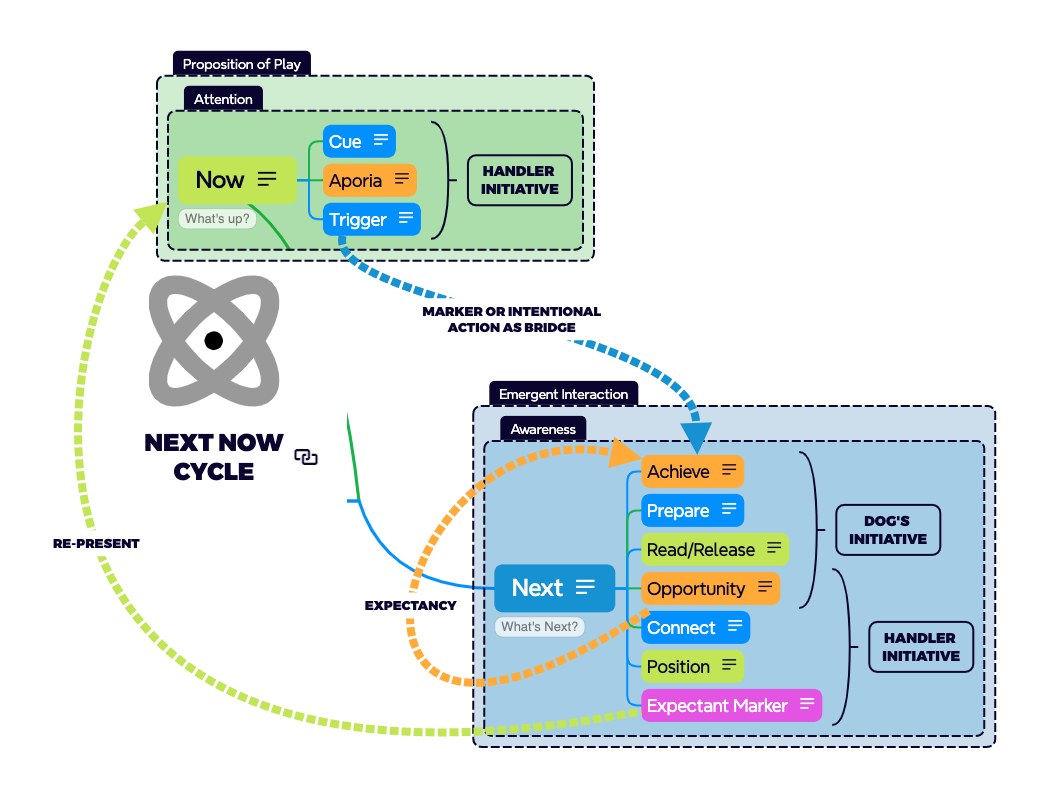
Next is where the play happens, the emergent interaction that is 100% unpredictable. If we’re lucky we’ll be able to figure out what actually happened after the sequence plays out; well, a bit of luck and a good deal of knowledge.
Now.
So you line up to do a twist (spin around in front of the handler). Give the cue,”Twist,” and pause. The dog will look to you and will be seeking the trigger. Dogs who don’t follow the trigger will go on their own. String the drama out a bit, 1-2 seconds, then pop your hand signal Trigger that the dog has been looking for, so the dog goes.
Next!
So the dog’s spinning,”Yes!” (Achievement!) and we give a cookie. Give the cookie to the dog’s face and let him eat it, you’ve got about 1 second to prepare because this Next shit is happening right Now. Throw the cookie and Next! plays out in front of you.
Dog Eats - Prepare
Orients - Read/Release
Approaches - Become Opportunity
and you need to have started to become Opportunity by this time, or you’re not gonna make it.
Keep Jamming or Reset
As you become Opportunity and Connect with the dog, there is a choice to be made. Continue to flow in Next! and do the loop back to Achievement, spiraling into a tight loop of Opportunity | Expectancy | Achievement or use the Opportunity to position for the reset, give a Marker on your positional reset, and let some drama cook up for a second or 3 and you’re back at Now.
Mark on Coupling
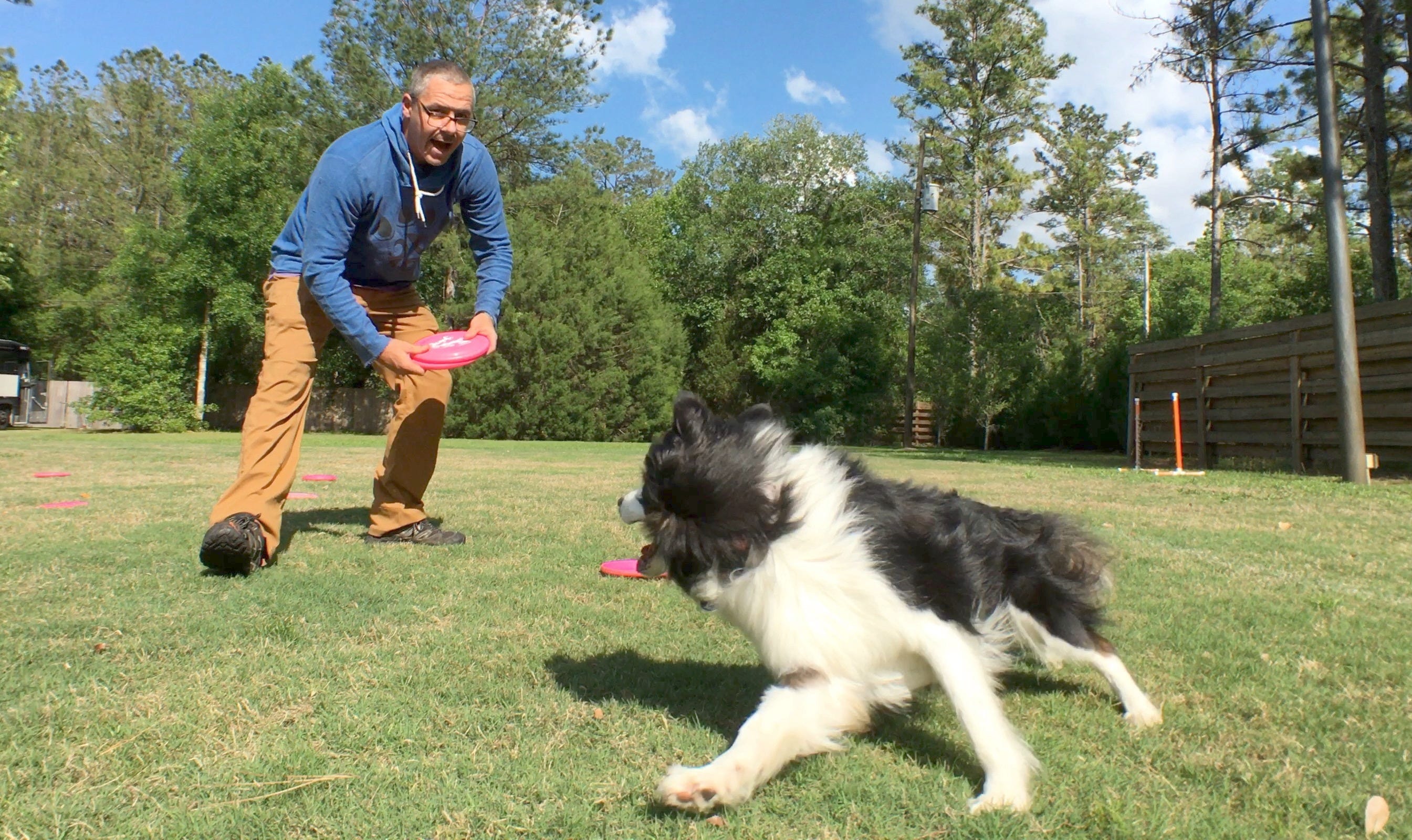
Dog eats… Mark or cue, the dog’s totally empty once they swallow that food. Dog orients to you with the disc in her mouth? That’s coupling! Mark or give a cue right then; great time for a drop cue. Dog changes lead or adjusts the approach to better couple with your position? Mark & motivate.
Once becoming Opportunity, same thing: Mark the moment of Connection with the next move or pop the trigger out at that moment. Consequent informed interaction is what we’re going for here. Mark those moments of coupling.
Attuning to Timing & Rhythm - Mechanics & Marking
Next Now and the Trigger Process combine to create a cyclical rhythm. Intentional coupling with the environment and the dog affords handlers control over that rhythm. Reward Placement and handler movement afford rhythm changes. Inefficient cookie delivery can bring the rhythm to a standstill (not always a bad thing…) affording a pause or a breaking of the rhythm. General timing of cues and stretching out the pauses between cycles also affords the shaping of the rhythm contours of the game.
Inceptive Marker = Yes! Let’s Go!
The Inceptive Marker was made to disclose coupling. It’s your positive marker given mid-chain, the cookie for which is the retention of Initiative by the Dog and satisfaction of the current action. These markers, if well timed, disclose key aspects of skills and bring them ready-to-hand as Ideal Skills. This can be thought of as the “physical” marker or perception marker; Inceptive Markers raise Awareness in flow.
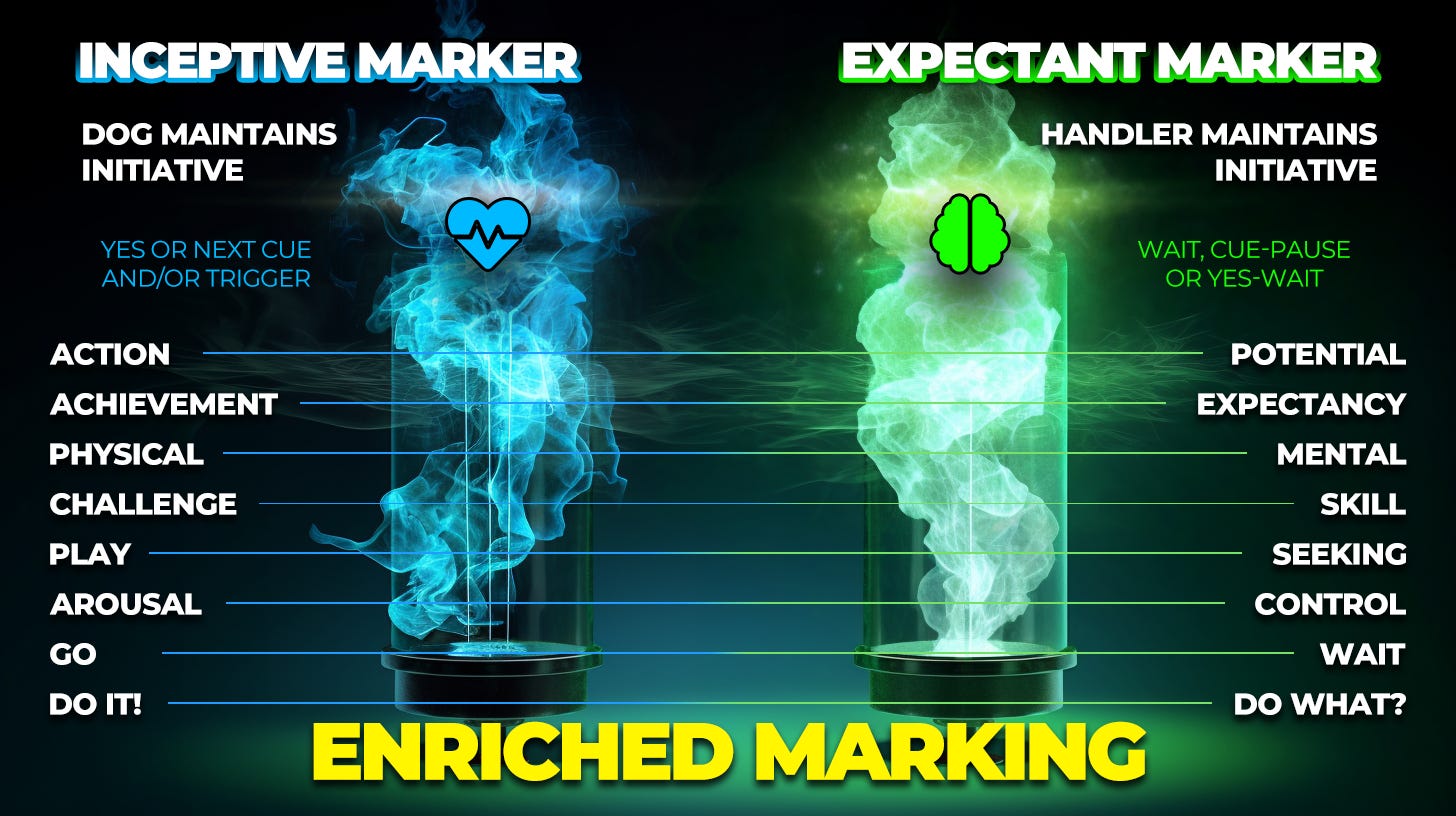
Expectant Marker = Yes! Whoa… so What’s Next?
The Expectant Marker is a positive marker followed by a freeze or a pause. This marker was made to create drama and to enable the handler to communicate desired performance while maintaining Initiative. These markers provide moments of grounding for the dog, handler or team or the opportunity to take a breath. These are mental markers and are highly useful for attunement and for maintaining flow with a slow or thoughtful rhythm to slow a dog down. Expectant Markers draw Attention in Flow.
Marking to Create Ideal Skills
Part of bringing the dog into the process is the intent to bring skills ready-to-hand for dog and handler. Ready-to-Hand means that the action or skill is a ready made tool that has flexible applications; you’ve done it before, experienced it, embodied it, now that move is in your quiver of tricks. Both dog and handler have Ideal Skills. These Ideal Skills are key affordances of action and are often our reflexive responses to sticky situations.
Inceptive Markers, Coupled Cuing, and thoughtful consequent interaction create Ideal Skills. Remember: Mark moments of coupling.